Are you trying to decide between Duolingo and Babbel for learning a new language? Both apps promise to help you speak, read, and understand foreign languages, but which one truly fits your needs?
Maybe you want quick, fun lessons you can do anywhere, or perhaps you prefer a more structured approach with clear grammar explanations. Choosing the right app can make all the difference in how fast and well you learn. You’ll discover the strengths and weaknesses of Duolingo and Babbel so you can pick the best tool to reach your language goals.
Keep reading to find out which one suits your style and helps you get fluent faster.
Credit: yourappland.com
Introduction To Duolingo And Babbel
Choosing the right language app depends on learning style and goals. Duolingo and Babbel are top choices for many learners worldwide. Each app offers unique features and teaching methods. Understanding these helps decide which fits best.
Overview Of Duolingo: Gamified, Accessible Language Learning
Duolingo uses a gamified approach to language learning. It turns lessons into fun, bite-sized exercises. Users earn points, unlock levels, and complete challenges. This keeps motivation high and learning consistent.
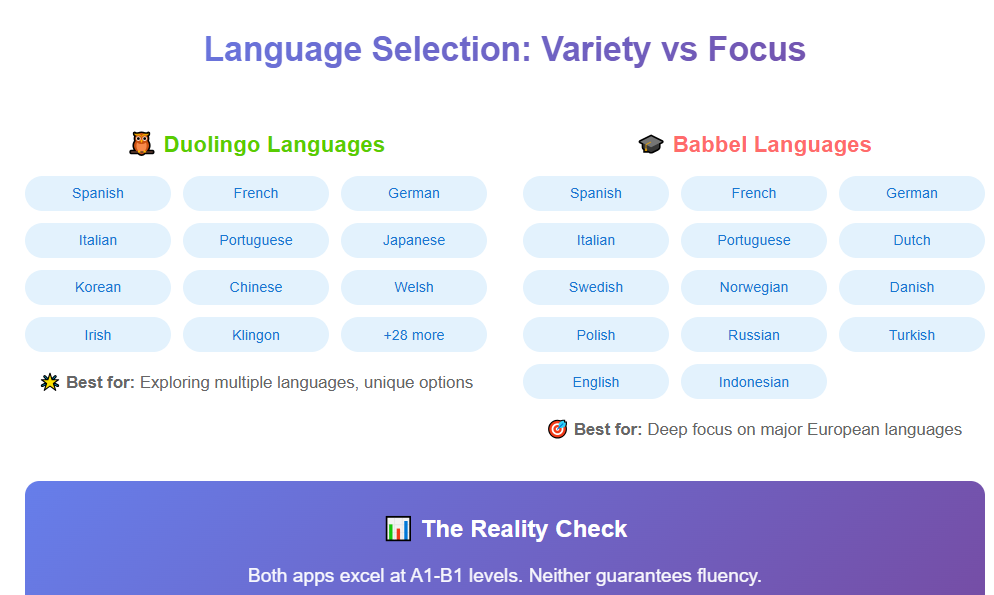
The app is free with optional paid features. It supports over 30 languages. Duolingo works well for beginners and casual learners. Lessons focus on vocabulary, grammar, and listening skills.
- Short, daily practice sessions
- Interactive exercises with immediate feedback
- Mobile-friendly and easy to use
Overview Of Babbel: Structured, Interactive Lessons With Cultural Context
Babbel offers structured lessons designed by language experts. It emphasizes conversation and real-life situations. Each lesson includes grammar, vocabulary, and pronunciation practice.
Babbel adds cultural insights to help learners understand context. It supports 14 languages and requires a subscription. Lessons build on each other, guiding users step-by-step.
- Focus on practical speaking skills
- Lessons tailored to different skill levels
- Includes cultural notes and dialogues
Purpose And Audience Of Each Platform
| Platform | Purpose | Target Audience |
|---|---|---|
| Duolingo | Make language learning fun and accessible | Beginners, casual learners, and those with limited time |
| Babbel | Provide structured lessons with practical language use | Serious learners wanting conversation skills and cultural context |
Credit: ilampadmanabhan.medium.com
Key Features Of Duolingo
Duolingo stands out as a popular language learning app. It offers tools that help users stay motivated and learn effectively. The app combines simple lessons with fun elements and flexible access. These features make it easy for many learners to start and keep going.
Gamification And Bite-sized Lessons: Enhancing Engagement And Motivation
Duolingo uses gamification to make learning feel like playing a game. Users earn points, unlock levels, and complete daily challenges. This approach keeps learning fun and less stressful.
Lessons are short and simple. Each lesson takes only a few minutes to complete. This helps learners fit practice into their busy days without feeling overwhelmed.
- Points and rewards for progress
- Short, focused lessons improve retention
- Streaks encourage daily practice
- Interactive exercises build skills step-by-step
Free Access With Optional Paid Tiers: Exploring Languages Without Commitment
Duolingo offers a free version that provides access to most lessons and features. This lets learners try different languages without paying upfront.
Paid tiers offer extra benefits like:
- Ad-free experience
- Offline access
- Progress quizzes and detailed feedback
The free option suits casual learners or beginners. Paid plans suit those wanting more features or faster progress.
Wide Variety Of Languages And Community Support: Catering To Diverse Learners
Duolingo supports over 30 languages, from popular ones like Spanish and French to less common ones like Welsh and Navajo. This variety attracts learners with different goals.
The app also has a large community. Users can discuss lessons, share tips, and help each other. This social support adds motivation and makes learning less lonely.
| Feature | Benefit |
|---|---|
| Languages Offered | More than 30 languages to choose from |
| Community Forums | Help and advice from fellow learners |
| Social Features | Friendly competition and motivation |
Key Features Of Babbel
Babbel offers a language learning experience focused on clear structure and practical use. Its features aim to help learners build a solid foundation while practicing real communication skills. The app blends grammar, culture, and speaking exercises to support steady progress.
Structured Lessons With Grammar Explanations: Building A Strong Language Foundation
Babbel’s lessons follow a clear and logical order. Each session introduces new words and phrases alongside grammar rules. This approach helps learners understand how sentences form and function.
Grammar explanations are simple and easy to follow. They appear right where learners need them, making the rules easy to remember. This structure helps users avoid confusion and builds confidence.
Cultural Context Integration: Deepening Language Understanding
Babbel includes cultural insights in its lessons. This feature connects language learning to real-life situations. Learners explore traditions, customs, and common expressions from native speakers.
Understanding culture makes the language more meaningful. It also prepares learners for conversations with locals. This integration helps users grasp not just words, but their true use.
Speaking And Writing Practice: Improving Communication Skills
Babbel emphasizes active language use. The app includes exercises that focus on speaking and writing. Learners practice pronunciation, sentence formation, and spelling.
- Speech recognition technology provides instant feedback on pronunciation.
- Writing tasks help users form clear and correct sentences.
- Regular practice builds fluency and confidence in everyday conversations.
This focus on communication skills makes Babbel practical for real-world use. It encourages learners to speak and write from early stages.

Credit: www.youtube.com
Pricing And Affordability Comparison
Choosing a language app depends heavily on cost and value. Both Duolingo and Babbel offer different pricing models. Understanding these helps learners select the best fit for their budget and goals.
Duolingo’s Free Model And Subscription Options: Cost-effective Learning
Duolingo shines with its free access. Learners can use the app without paying a dime. The free version offers:
- Access to all basic lessons
- Gamified learning with daily practice
- Limited ads between lessons
For a smoother experience, Duolingo offers a Plus subscription. This plan removes ads and adds benefits like offline access and progress tracking. Pricing is:
| Subscription Type | Cost (Approx.) | Key Benefits |
|---|---|---|
| Monthly | $6.99 | No ads, offline mode, progress quizzes |
| Annual | $83.99 | Same benefits with savings over monthly |
Duolingo suits learners seeking a cost-effective start or casual practice.
Babbel’s Subscription Plans And Value Proposition: Investment In Structured Education
Babbel offers only paid subscriptions with a focus on structured lessons. It does not have a free full-access model. Subscription costs vary by duration:
| Plan Duration | Cost (Approx.) | Highlights |
|---|---|---|
| 1 month | $12.95 | Full access to lessons and reviews |
| 3 months | $26.85 ($8.95/month) | Discounted rate, same full access |
| 6 months | $44.70 ($7.45/month) | Best value per month, full access |
Babbel emphasizes structured learning paths and grammar focus. It suits learners ready to invest in a guided education.
Which Pricing Plan Suits Different Learner Needs?
Choosing the right plan depends on your goals and budget. Consider the options:
- Casual learners or beginners: Duolingo’s free version is perfect. No cost, good for trying languages.
- Committed learners on a budget: Duolingo Plus offers ad-free learning at a low monthly fee.
- Serious learners seeking structure: Babbel’s 3 or 6-month plans provide deep lessons and grammar explanations.
- Short-term learners: Babbel’s 1-month plan gives full access for quick learning bursts.
Each app fits different budgets and learning styles. Duolingo suits free and flexible use. Babbel suits those ready to pay for a clear path.
Pros And Cons Based On Real-world Usage
Choosing between Duolingo and Babbel depends on what learners need most. Both platforms have unique strengths and weaknesses. Real users highlight different experiences with each app. Understanding these helps pick the right tool.
Advantages And Limitations Of Duolingo: Accessibility Vs Depth
Duolingo is famous for its free access and ease of use. Users can start learning quickly on phones or computers.
- Advantages:
- Free basic courses available to everyone
- Gamified lessons make learning fun and engaging
- Wide variety of languages offered
- Short lessons fit into busy schedules
- Limitations:
- Limited depth in grammar and language rules
- Repetitive exercises may reduce long-term retention
- Less focus on conversational skills
- Some advanced learners find content too basic
Duolingo works well for beginners and casual learners. However, it may lack detail for users wanting thorough language mastery.
Advantages And Limitations Of Babbel: Structured Learning Vs Cost
Babbel offers a more organized and in-depth learning path. Lessons build gradually on grammar and vocabulary.
- Advantages:
- Clear, structured courses designed by language experts
- Focus on practical conversations and real-life situations
- Grammar explanations integrated into lessons
- Speech recognition helps improve pronunciation
- Limitations:
- Requires paid subscription to access full content
- Less variety of languages compared to Duolingo
- Lessons can feel less game-like and engaging
- Subscription cost may be a barrier for some users
Babbel suits learners serious about language skills. The cost adds value through quality content but limits free trial use.
User Feedback And Learning Outcomes From Both Platforms
| Aspect | Duolingo | Babbel |
|---|---|---|
| User Satisfaction | High for casual learners and beginners | High for motivated learners seeking structure |
| Learning Speed | Fast start but slower progress in depth | Steady progress with focus on grammar and speaking |
| Retention | Mixed; repetition helps but may feel shallow | Better retention due to explanations and practice |
| Speaking Skills | Limited speaking practice | Strong emphasis on conversational practice |
| Overall Outcome | Good for vocabulary and basic skills | More effective for real-life communication |
Many users appreciate Duolingo’s free model but find Babbel better for serious learning. Babbel’s structured lessons often lead to stronger speaking abilities.
Ideal Users And Learning Scenarios
Choosing between Duolingo and Babbel depends on who you are and how you want to learn. Both apps serve different needs and learning styles. Understanding these differences helps pick the right tool for your language journey.
Who Benefits Most From Duolingo: Casual Learners And Beginners
Duolingo suits casual learners and those just starting a language. Its design is simple and fun, making it easy to open the app daily.
- Short lessons fit busy schedules.
- Game-like features keep motivation high.
- Variety of languages to choose from.
- Good for building basic vocabulary and phrases.
Beginners enjoy the stress-free environment. The app encourages practice without pressure. It also works well for learners who want to try multiple languages at once.
Who Benefits Most From Babbel: Learners Seeking Structured Progression
Babbel is ideal for learners who want a clear learning path. Its courses follow a logical order, helping users build skills step-by-step.
- Lessons focus on grammar and real-life conversations.
- Designed to improve speaking and understanding.
- Offers cultural notes to deepen learning.
- Great for serious learners aiming for fluency.
The app works well for those who prefer detailed explanations and structured content. Babbel suits users who commit to regular study with clear goals.
When To Choose One Over The Other Based On Goals And Preferences
| Learning Goal | Choose Duolingo | Choose Babbel |
|---|---|---|
| Start learning a new language casually | Yes | No |
| Build basic vocabulary quickly | Yes | Sometimes |
| Follow a structured course with grammar focus | No | Yes |
| Improve speaking and conversation skills | Limited | Yes |
| Learn multiple languages at once | Yes | No |
| Prefer detailed lessons with cultural context | No | Yes |
Preferences also matter. Choose Duolingo for a playful approach. Pick Babbel for serious study with clear steps.
Alternative Language Learning Options To Consider
Choosing the right app can shape your language learning journey. Some apps focus on speaking, others on reading or feedback. Exploring alternatives helps find a method that fits your style. Here are some popular options beyond Duolingo and Babbel.
Pimsleur: Audio-focused Speaking And Listening Improvement
Pimsleur centers on audio lessons designed to improve speaking and listening skills. It uses spaced repetition to help remember words and phrases. Lessons last about 30 minutes, perfect for daily practice.
- Focus on pronunciation and conversation.
- Hands-free learning, suitable for commuting.
- Gradual build-up of vocabulary and grammar.
This method suits learners who want to speak confidently and understand native speech.
Busuu: Native Speaker Feedback And Cefr-aligned Lessons
Busuu offers lessons aligned with the Common European Framework of Reference (CEFR). It provides structured learning from beginner to advanced levels.
- Practice writing and speaking with native speaker feedback.
- Interactive exercises focus on real-life situations.
- Personalized study plans based on your goals.
Busuu stands out for its community feature, allowing corrections from native speakers. This helps improve accuracy and confidence.
Other Notable Apps: Lingq And Rosetta Stone For Immersive And Reading-focused Learning
| App | Strengths | Focus |
|---|---|---|
| LingQ | Extensive reading materials and vocabulary building | Immersive reading and listening |
| Rosetta Stone | Immersive learning with visual and audio cues | Speaking, listening, and reading |
LingQ suits learners who enjoy reading and want to expand vocabulary through context. Rosetta Stone offers an immersive experience, teaching language naturally without translation.
How To Choose The Best Language Learning App For You
Choosing a language app depends on your personal needs and goals. Each app offers different strengths. Knowing what you want helps you pick the right one. Focus on your learning goals, style, and budget for the best match.
Assessing Your Learning Goals: Speaking, Reading, Or Comprehensive Skills
Identify your main goal first. Do you want to speak confidently, read texts, or learn all skills evenly?
- Speaking: Look for apps with strong speaking exercises and pronunciation practice.
- Reading: Choose apps with rich reading materials and vocabulary building.
- Comprehensive skills: Pick apps that balance listening, speaking, reading, and writing.
Babbel focuses more on conversational skills with real-life dialogues. Duolingo offers a balanced mix but is game-like and often more suited for beginners.
Matching Learning Style Preferences With App Features
Consider how you learn best. Do you like structured lessons or playful, interactive games?
| Learning Style | Babbel Features | Duolingo Features |
|---|---|---|
| Structured Learning | Clear, grammar-focused lessons with explanations | Less grammar explanation, more repetition |
| Interactive & Fun | Moderate gamification, more serious tone | Strong gamification with points and streaks |
| Short Sessions | 10-15 minute lessons, ideal for busy learners | Very short activities, easy to fit into breaks |
Considering Budget And Trial Options Before Subscribing
Check pricing and trial availability before buying. Both apps offer free versions, but paid plans give full access.
- Babbel: Offers a subscription with a free trial period. Prices vary by length of subscription. Lifetime deals may be available.
- Duolingo: Free version has ads and limited features. Duolingo Plus removes ads and adds offline access for a monthly fee.
Try free versions or trials to test which app fits your style and goals before paying.
Conclusion: Uncovering The Ultimate Winner
Choosing between Duolingo and Babbel depends on your learning style and goals. Both platforms offer unique features and benefits. Understanding these differences helps find the best fit for you.
Summary Of Key Differences And Benefits
| Feature | Duolingo | Babbel |
|---|---|---|
| Learning Style | Game-like, interactive, casual | Structured, conversational, practical |
| Course Depth | Basic to intermediate | Beginner to advanced |
| Languages Offered | Over 35 languages | 14 major languages |
| Pricing | Free with ads; Premium available | Subscription-based (paid only) |
| Focus Areas | Vocabulary, reading, listening | Speaking, grammar, real-life dialogues |
Duolingo suits learners who prefer fun, flexible practice. Babbel fits those who want a clear path with practical conversation skills.
Final Recommendations Based On Individual Needs
- For casual learners: Duolingo offers free, easy access to many languages.
- For serious learners: Babbel provides in-depth lessons and speaking practice.
- For budget-conscious: Duolingo’s free plan is a strong choice.
- For fast conversational skills: Babbel’s structure helps build useful phrases quickly.
Encouragement To Try Both Platforms For Informed Decision-making
Try both Duolingo and Babbel to see what suits your style best. Each platform offers trial options or free content. Spend a few days on each to compare lesson formats, difficulty, and user experience.
Personal experience is key to choosing a language app that keeps you motivated and progressing.
Frequently Asked Questions
What Is The 1 Best Language Learning App?
Duolingo ranks as the 1 language learning app for beginners. It offers free, gamified, bite-sized lessons that make learning fun and accessible.
Can You Become Fluent Using Babbel Or Duolingo?
Babbel and Duolingo help build language basics but rarely make users fully fluent alone. Combine apps with real practice.
Why Do People Stop Using Duolingo?
People stop using Duolingo due to lack of motivation, limited speaking practice, repetitive lessons, or preferring more structured learning methods.
What Are The Weaknesses Of Babbel?
Babbel’s weaknesses include limited language options and less engaging, repetitive lessons. It lacks advanced speaking practice and offline features. The app can feel costly compared to competitors, and its grammar focus may overwhelm casual learners.
Conclusion
Choosing between Duolingo and Babbel depends on your learning style. Duolingo offers fun, quick lessons for casual practice. Babbel provides structured, detailed lessons with grammar and culture. Both apps help build vocabulary and basic skills. For serious learners, Babbel’s clear explanations may suit better.
For beginners or casual users, Duolingo’s game-like approach works well. Try both to see which fits your needs. Remember, consistent practice matters more than the app you choose. Language learning takes time, patience, and daily effort. Keep going, and you will improve step by step.