
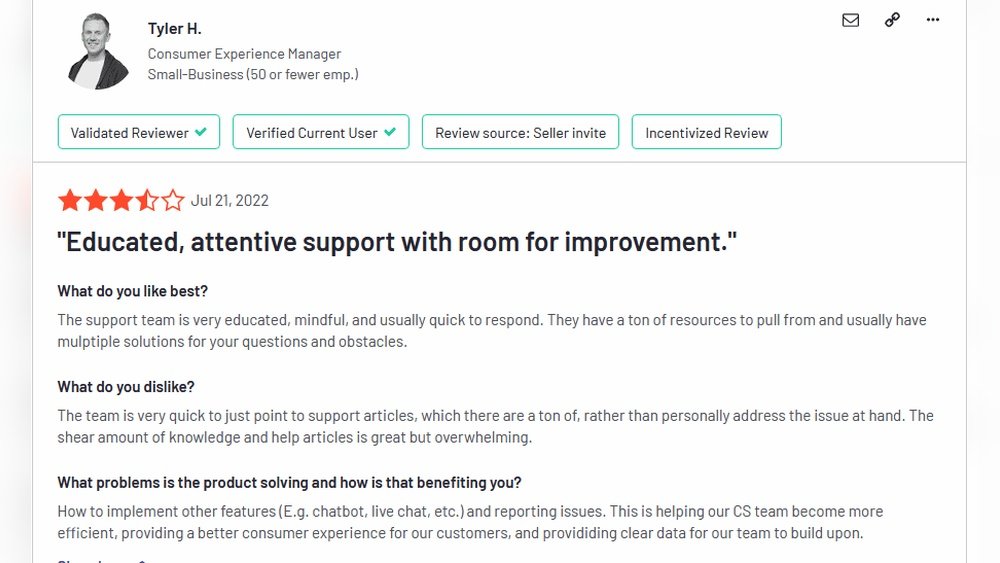
Choosing the right customer support tool can make or break your business. In this Thrivedesk vs Zendesk comparison, you’ll see which platform is easy to use, powerful, and fits your budget.
That’s why you’re here, comparing ThriveDesk and Zendesk. Both promise to streamline your support, but which one truly delivers what you need? Whether you’re a small business owner or part of a growing team, this head-to-head look will help you see which solution matches your goals.
Keep reading to discover which platform will boost your customer service without complicating your workflow or draining your resources. Your perfect support system is just a few scrolls away.
Introduction To Thrivedesk And Zendesk
Choosing the right customer support tool shapes how businesses connect with clients. Thrivedesk and Zendesk stand out as notable options. Each has unique strengths tailored to different needs. Understanding their core features helps companies pick the best fit.
Overview Of Thrivedesk: Purpose And Target Audience
Thrivedesk focuses on AI automation to simplify customer service tasks. It targets small to medium businesses, aiming to streamline support with smart technology. The platform offers easy ticket management, automation, and integration features.
- Designed for startups and growing teams
- Emphasizes automation to reduce manual work
- Ideal for businesses seeking cost-effective support solutions
- Focus on quick setup and a user-friendly interface
Overview Of Zendesk: Purpose And Target Audience
Zendesk serves a broad range of companies, from small businesses to large enterprises. It provides a powerful and flexible customer support platform. The tool excels in handling high volumes of requests and complex support workflows.
- Used by diverse industries worldwide
- Offers extensive features for ticketing and analytics
- Best for businesses needing advanced customization
- Pricing can be high for small teams
Why Comparing Thrivedesk And Zendesk Matters For Smart Support Choices
Both tools offer customer support solutions, but serve different needs. Comparing them helps businesses avoid costly mistakes. Here is why the comparison is crucial:
- Cost Efficiency: Thrivedesk suits budget-conscious teams, Zendesk fits those needing scale.
- Feature Match: Identify which features match your business size and goals.
- Ease of Use: Thrivedesk offers simplicity; Zendesk provides depth and complexity.
- Integration Needs: Zendesk supports extensive integrations; Thrivedesk focuses on essential apps.
Choosing based on these factors leads to smarter support decisions.
Credit: markuphero.com
Key Features Of Thrivedesk
Thrivedesk offers a robust set of features designed to simplify customer support. It helps businesses handle communications smoothly and improves team productivity. These features focus on making support faster, easier, and more organized.
Unified Inbox And Multi-channel Support: Streamlining Customer Communication
Thrivedesk provides a unified inbox that gathers messages from different channels in one place. Support teams can reply to emails, chats, and social media messages without switching apps. This streamlines communication and reduces the chance of missing customer requests.
- Central inbox for emails, live chat, and social media
- Real-time notifications for new messages
- Easy tracking of customer conversations
Automation And Workflow Tools: Enhancing Efficiency And Reducing Manual Tasks
Automation features in Thrivedesk help save time by handling repetitive tasks. Support tickets can be assigned automatically to the right team member. Custom workflows guide agents through standard procedures, ensuring consistent service.
- Auto-assignment of tickets
- Customizable workflow rules
- Automated follow-ups and reminders
These tools reduce manual work and let teams focus on solving problems.
Integration Capabilities: Connecting With Popular Apps For Seamless Operations
Thrivedesk connects with many popular apps and tools. This integration capability allows data to flow smoothly between systems. Teams can sync customer information, orders, and support history without extra effort.
| Integration | Purpose |
|---|---|
| Shopify | Sync orders and customer data |
| Slack | Receive notifications and alerts |
| Zapier | Connect with 2,000+ apps |
These integrations help maintain seamless operations across platforms.
User-friendly Interface: Simplifying Support For Small To Medium Businesses
Thrivedesk is built with simplicity in mind. Its clean and intuitive interface suits small to medium businesses. Support agents can learn the system quickly and start helping customers right away.
- Easy navigation with clear menus
- Minimal training required
- Responsive design for all devices
The interface reduces confusion and speeds up daily tasks.
Key Features Of Zendesk
Zendesk offers a comprehensive suite of features designed to streamline customer support. Its tools suit businesses with complex needs and large teams. The platform focuses on efficient ticket handling, deep analytics, wide integrations, and flexible scaling options. These capabilities help companies deliver quality service and manage growth.
Robust Ticket Management System: Handling Complex Support Needs
Zendesk’s ticket system organizes customer requests clearly and efficiently. It supports multiple channels like email, chat, phone, and social media. Agents can track, prioritize, and resolve tickets quickly. The system includes automation rules that reduce manual work and speed up responses.
- Unified inbox for all support channels
- Automated ticket routing and assignment
- Custom ticket statuses and priorities
- Collaboration tools for team communication
This setup suits businesses with complex support demands and high ticket volumes.
Advanced Analytics And Reporting: Data-driven Decision Making
Zendesk provides detailed reports on support performance. Managers access real-time data on ticket volume, response times, and customer satisfaction. Customizable dashboards help spot trends and bottlenecks. This insight leads to better staffing and improved service quality.
- Pre-built and custom report templates
- Customer satisfaction tracking
- Agent performance metrics
- Trend analysis over time
Extensive Integration Ecosystem: Supporting Diverse Business Tools
Zendesk connects with many apps across business functions. This ensures support teams work in sync with sales, marketing, and IT systems. Integrations include popular CRM, ecommerce, and communication platforms.
| Integration Type | Examples |
|---|---|
| Customer Relationship Management (CRM) | Salesforce, Microsoft Dynamics |
| E-commerce Platforms | Magento, Shopify (limited support) |
| Communication Tools | Slack, Microsoft Teams |
| Marketing Automation | Marketo, HubSpot |
These integrations enable seamless workflows and data sharing across departments.
Scalability And Customization: Suitable For Large Enterprises And Growing Teams
Zendesk scales to meet the needs of large enterprises and expanding teams. It offers customizable workflows, roles, and access controls. Businesses can tailor the platform to fit unique processes and compliance requirements.
- Flexible user roles and permissions
- Custom ticket fields and forms
- Support for multi-brand and multi-language setups
- API access for advanced customization
This flexibility supports business growth without switching platforms.

Credit: www.thrivedesk.com
Pricing And Affordability Comparison
Choosing the right help desk software depends heavily on pricing and affordability. Both Thrivedesk and Zendesk offer distinct pricing models that suit different business sizes and needs. Understanding their pricing structures helps small and medium businesses make smart investments. This section breaks down the costs and value each platform provides.
Thrivedesk Pricing Structure: Value For Small And Medium Businesses
Thrivedesk offers a simple and budget-friendly pricing model ideal for startups and growing companies. Its plans are designed to provide core support features without overwhelming costs.
- Basic Plan: A low-cost entry option with essential ticketing and automation tools.
- Pro Plan: Adds integrations and advanced automation for scaling support teams.
- Enterprise Plan: Custom pricing for larger businesses needing tailored solutions.
Thrivedesk focuses on ease of use and affordability, making it easier for smaller teams to get started. Its pricing is straightforward with fewer hidden fees.
Zendesk Pricing Plans: Understanding Tiers And Cost Implications
Zendesk uses a tiered pricing system with multiple plans that increase in features and cost. This structure targets businesses of all sizes but can be pricey for smaller companies.
| Plan | Price (per agent/month) | Key Features |
|---|---|---|
| Essential | $19 | Basic ticketing, email support |
| Team | $49 | Collaboration, integrations, analytics |
| Professional | $99 | Advanced automation, multi-channel support |
| Enterprise | Custom pricing | Custom roles, SLA, AI-powered tools |
Zendesk’s pricing grows steeply with added features. Some valuable tools only appear in higher tiers. This may limit affordability for smaller teams.
Cost-Benefit Analysis: Which Platform Offers Better Roi For Your Needs?
Thrivedesk delivers strong value through affordable pricing and essential features. It suits small and medium businesses that want effective support without high costs.
Zendesk provides a rich feature set, but at a higher price. It works well for companies needing advanced tools and willing to invest more.
- Thrivedesk: Lower price, simpler plans, quicker setup.
- Zendesk: Higher cost, more features, better for large teams.
Choosing between them depends on budget and feature needs. Thrivedesk offers better ROI for learner budgets. Zendesk fits best where complex support and integrations are critical.
Pros And Cons Based On Real-world Usage
Choosing the right customer support tool requires understanding real user experiences. Both Thrivedesk and Zendesk offer unique features and face different challenges. This section highlights their practical advantages and limitations as reported by users.
Advantages Of Thrivedesk: Practical Benefits Observed By Users
- AI Automation: Thrivedesk uses AI to streamline customer support tasks, saving time.
- Ease of Use: Users find Thrivedesk intuitive with a clean, simple interface.
- Cost-Effective: More affordable for small to mid-sized teams compared to Zendesk.
- Quick Setup: Minimal learning curve; teams can start managing tickets fast.
- Multichannel Support: Handles emails, chats, and social media in one place.
Limitations Of Thrivedesk: Challenges And Areas For Improvement
- Limited Integrations: Fewer third-party integrations than more established tools.
- Feature Depth: Some advanced support features are missing or still developing.
- Scalability: May not suit very large teams or enterprises yet.
- Reporting: Basic analytics, lacks the detailed reporting Zendesk offers.
Advantages Of Zendesk: Strengths Backed By Industry Adoption
- Robust Features: Comprehensive ticket management and automation capabilities.
- Wide Integrations: Supports many e-commerce platforms like Shopify and Magento.
- Scalable: Suitable for businesses of all sizes, including large enterprises.
- Industry Standard: Trusted by many companies worldwide for reliable support.
- Advanced Reporting: Detailed analytics help improve support performance.
Limitations Of Zendesk: Common User Complaints And Drawbacks
- High Pricing: Costs increase quickly, especially for advanced features.
- Complex Plans: Pricing tiers and feature access can be confusing.
- E-commerce Support: Integration with some e-commerce platforms is not robust.
- Overwhelming for Small Teams: Too many features may complicate simple workflows.
Ideal User Recommendations And Use Cases
Choosing the right customer support platform depends on business size, needs, and budget. Both Thrivedesk and Zendesk serve distinct user groups. Understanding which tool fits your scenario improves customer experience and team efficiency.
Who Should Choose Thrivedesk: Best Scenarios And Business Types
Thrivedesk suits small to medium businesses focused on simple, effective AI automation in customer support. It works well for teams seeking affordable, easy-to-use help desk software.
- Startups needing quick setup and minimal technical overhead
- Small businesses wanting cost-effective customer service tools
- Companies that prefer AI automation to reduce manual work
- Teams looking for straightforward ticket management without complex pricing
Thrivedesk excels in scenarios requiring smooth automation combined with basic support features. It fits industries like e-commerce, SaaS startups, and service providers with moderate ticket volumes.
Who Should Choose Zendesk: Optimal Use Cases And Industry Fits
Zendesk targets medium to large enterprises needing advanced support tools and integrations. It offers a robust system for companies with complex workflows and high support demands.
- Large businesses with multiple support channels
- Enterprises requiring deep customization and analytics
- Organizations demanding integrations with many third-party apps
- Teams managing high ticket volumes and multi-department collaboration
Zendesk fits industries like telecom, financial services, and large e-commerce stores. It suits businesses ready to invest in premium features and scalable solutions.
Comparative Scenarios: Deciding Between Thrivedesk And Zendesk For Specific Needs
| Scenario | Thrivedesk | Zendesk |
|---|---|---|
| Budget-Friendly Solution | Ideal for startups and small teams needing affordable tools | Less suitable due to high pricing and complex plans |
| AI Automation Focus | Built-in AI helps automate repetitive tasks efficiently | Advanced automation, but mostly at higher pricing tiers |
| Complex Multi-Channel Support | Basic channel support, best for simple workflows | Strong multi-channel and multi-department support |
| Integration Needs | Limited integration with e-commerce platforms | Wide range of integrations, including e-commerce and CRM |
| Scalability | Best for growing small to medium businesses | Designed for large enterprises with complex needs |
Consider your business size, budget, and feature needs. Thrivedesk offers simplicity and AI-driven automation at a lower cost. Zendesk provides advanced features for large, complex operations, but at higher prices.
Conclusion: Making The Smart Support Choice
Choosing the right support platform shapes your customer service quality. Both Thrivedesk and Zendesk offer unique benefits. Understanding their differences helps pick the best fit for your needs. Below is a clear summary and helpful guidance.
Summarizing Key Differences And Strengths
| Feature | Thrivedesk | Zendesk |
|---|---|---|
| Ease of Use | Simple interface with AI automation for quick setup | Feature-rich but can be complex for beginners |
| Pricing | Affordable with straightforward plans | Higher price and complicated tiers |
| Integration with E-commerce | Good integration options suitable for small businesses | Limited support for major e-commerce platforms like Shopify |
| Best Use Case | Small to medium businesses seeking AI automation | Large enterprises need complex ticket management |
| Free Plan Availability | Not typically free but affordable | Free alternatives exist but Zendesk itself is paid |
Final Thoughts On Selecting The Right Support Platform
Thrivedesk suits teams valuing simplicity and AI support. It streamlines workflows without overwhelming users.
Zendesk excels in large-scale operations requiring advanced features. It fits businesses ready to invest in complex support tools.
Match your choice to business size, budget, and support needs. Consider how much automation or customization you want. Simplicity favors Thrivedesk. Power and depth lean toward Zendesk.
Additional Resources And Alternatives To Consider
- Freshdesk: A free plan with basic support tools for small teams.
- HubSpot Service Hub: Integrates CRM with customer service, free tier available.
- Zoho Desk: Affordable with good automation features.
- Help Scout: Focuses on personal customer support experience.
- Open-source options: osTicket and FreeScout offer free self-hosted solutions.
- Intercom and Tidio: Specialize in live chat and sales-focused support.
These platforms provide alternatives depending on budget, scale, and feature needs.
Frequently Asked Questions
Who Is Zendesk’s Biggest Competitor?
Zendesk’s biggest competitor is Intercom. It offers an all-in-one customer support platform with strong messaging and automation features.
What Are The Disadvantages Of Zendesk?
Zendesk has a high price with complex plans. It lacks strong e-commerce integrations and limits top features to expensive tiers. Small businesses may find it less suitable for ticket management.
What Is The Free Alternative To Zendesk?
Free alternatives to Zendesk include Freshdesk, HubSpot Service Hub, Zoho Desk, Help Scout, osTicket, and FreeScout. These offer free plans or open-source, self-hosted options suitable for small teams and startups with basic support needs.
What Is The Difference Between Zendesk And Edesk?
Zendesk focuses on broad customer support with extensive integrations. EDesk specializes in e-commerce support, offering tailored tools for marketplaces like Amazon and eBay. Zendesk suits diverse industries, while eDesk targets online sellers needing order and feedback management.
Conclusion
Choosing between Thrivedesk and Zendesk depends on your business needs and budget. Thrivedesk offers simple AI automation ideal for small teams. Zendesk provides a wide range of features, itbut can be costly. Both platforms support customer service well, but differ in pricing and ease of use.
Consider your team size and the tools you need daily. Testing each option can help find the best fit. Good support software saves time and improves customer happiness. Make a choice that suits your goals and resources.